【文化與學習講座】12/13(四)陳承德/本校教育心理與諮商學系副教授:差異試題功能的研究分享Researches on Differential Item Functioning
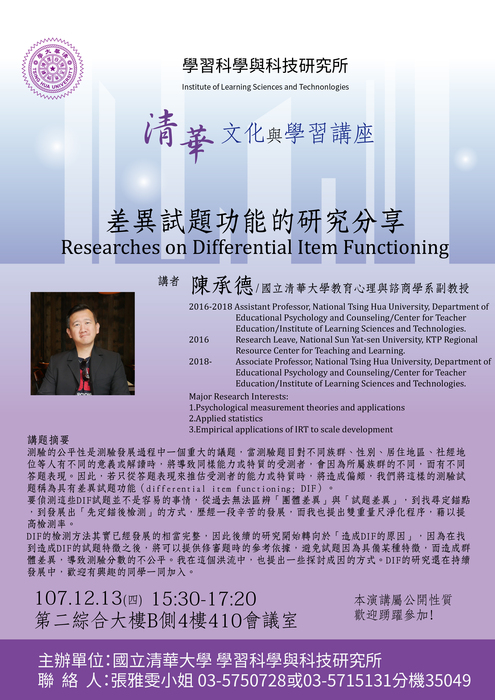
【講題】差異試題功能的研究分享 Researches on Differential Item Functioning
【講者】陳承德/國立清華大學教育心理與諮商學系副教授
【時間】107/12/13(四)15:30-17:20
【地點】本校第二綜合大樓B側4樓410視訊會議室
【講者簡介】
Timeline
1997-2001 B.Sc, National Chengchi University, Psychology.
2001-2003 Graduate school training, National Chung Cheng University, Psychology.
2003-2009 Ph.D, National Chung Cheng University, Psychology.
2006-2007 Graduate Students Study Abroad Program, University of California-Berkeley, Graduate School of Education.
2008-2009 Research Assistant, National Taiwan University, School of Occupational Therapy.
2010-2016 Assistant Professor, National Tsing Hua University, Center for Teacher Education/Institute of Learning Sciences.
2016-2018 Assistant Professor, National Tsing Hua University, Department of Educational Psychology and Counseling/Center for Teacher Education/Institute of Learning Sciences and Technologies.
2016 Research Leave, National Sun Yat-sen University, KTP Regional Resource Center for Teaching and Learning.
2018- Associate Professor, National Tsing Hua University, Department of Educational Psychology and Counseling/Center for Teacher Education/Institute of Learning Sciences and Technologies.
Major Research Interests:
Psychological measurement theories and applications
Applied statistics
Empirical applications of IRT to scale development
【演講摘要】
測驗的公平性是測驗發展過程中一個重大的議題,當測驗題目對不同族群、性別、居住地區、社經地位等人有不同的意義或解讀時,將導致同樣能力或特質的受測者,會因為所屬族群的不同,而有不同答題表現。因此,若只從答題表現來推估受測者的能力或特質時,將造成偏頗,我們將這樣的測驗試題稱為具有差異試題功能(differential item functioning; DIF)。
要偵測這些DIF試題並不是容易的事情,從過去無法區辨「團體差異」與「試題差異」,到找尋定錨點,到發展出「先定錨後檢測」的方式,歷經一段辛苦的發展,而我也提出雙重量尺淨化程序,藉以提高檢測率。
DIF的檢測方法其實已經發展的相當完整,因此後續的研究開始轉向於「造成DIF的原因」,因為在找到造成DIF的試題特徵之後,將可以提供修審題時的參考依據,避免試題因為具備某種特徵,而造成群體差異,導致測驗分數的不公平。我在這個洪流中,也提出一些探討成因的方式。DIF的研究還在持續發展中,歡迎有興趣的同學一同加入。
延伸閱讀資料:
Wang, W. C. (2008). Assessment of differential item functioning. Journal of Applied Measurement, 9, 387-408.
Wang, W. C., Shih, C. L., & Sun, G. W. (2012). The DIF-free-then-DIF strategy for the assessment of differential item functioning. Educational and Psychological Measurement, 72, 687-708.
Zumbo, B. D., Liu, Y., Wu, A. D., Shear, B. R., Olvera Astivia, O. L., & Ark, T. K. (2015). A methodology for Zumbo’s third generation DIF analyses and the ecology of item responding. Language Assessment Quarterly, 12(1), 136-1.
【講者】陳承德/國立清華大學教育心理與諮商學系副教授
【時間】107/12/13(四)15:30-17:20
【地點】本校第二綜合大樓B側4樓410視訊會議室
【講者簡介】
Timeline
1997-2001 B.Sc, National Chengchi University, Psychology.
2001-2003 Graduate school training, National Chung Cheng University, Psychology.
2003-2009 Ph.D, National Chung Cheng University, Psychology.
2006-2007 Graduate Students Study Abroad Program, University of California-Berkeley, Graduate School of Education.
2008-2009 Research Assistant, National Taiwan University, School of Occupational Therapy.
2010-2016 Assistant Professor, National Tsing Hua University, Center for Teacher Education/Institute of Learning Sciences.
2016-2018 Assistant Professor, National Tsing Hua University, Department of Educational Psychology and Counseling/Center for Teacher Education/Institute of Learning Sciences and Technologies.
2016 Research Leave, National Sun Yat-sen University, KTP Regional Resource Center for Teaching and Learning.
2018- Associate Professor, National Tsing Hua University, Department of Educational Psychology and Counseling/Center for Teacher Education/Institute of Learning Sciences and Technologies.
Major Research Interests:
Psychological measurement theories and applications
Applied statistics
Empirical applications of IRT to scale development
【演講摘要】
測驗的公平性是測驗發展過程中一個重大的議題,當測驗題目對不同族群、性別、居住地區、社經地位等人有不同的意義或解讀時,將導致同樣能力或特質的受測者,會因為所屬族群的不同,而有不同答題表現。因此,若只從答題表現來推估受測者的能力或特質時,將造成偏頗,我們將這樣的測驗試題稱為具有差異試題功能(differential item functioning; DIF)。
要偵測這些DIF試題並不是容易的事情,從過去無法區辨「團體差異」與「試題差異」,到找尋定錨點,到發展出「先定錨後檢測」的方式,歷經一段辛苦的發展,而我也提出雙重量尺淨化程序,藉以提高檢測率。
DIF的檢測方法其實已經發展的相當完整,因此後續的研究開始轉向於「造成DIF的原因」,因為在找到造成DIF的試題特徵之後,將可以提供修審題時的參考依據,避免試題因為具備某種特徵,而造成群體差異,導致測驗分數的不公平。我在這個洪流中,也提出一些探討成因的方式。DIF的研究還在持續發展中,歡迎有興趣的同學一同加入。
延伸閱讀資料:
Wang, W. C. (2008). Assessment of differential item functioning. Journal of Applied Measurement, 9, 387-408.
Wang, W. C., Shih, C. L., & Sun, G. W. (2012). The DIF-free-then-DIF strategy for the assessment of differential item functioning. Educational and Psychological Measurement, 72, 687-708.
Zumbo, B. D., Liu, Y., Wu, A. D., Shear, B. R., Olvera Astivia, O. L., & Ark, T. K. (2015). A methodology for Zumbo’s third generation DIF analyses and the ecology of item responding. Language Assessment Quarterly, 12(1), 136-1.
公告單位:
國立清華大學